About
Everything Begins With Witness
Nature
Artwork
Poetry
—Cynthia Winter
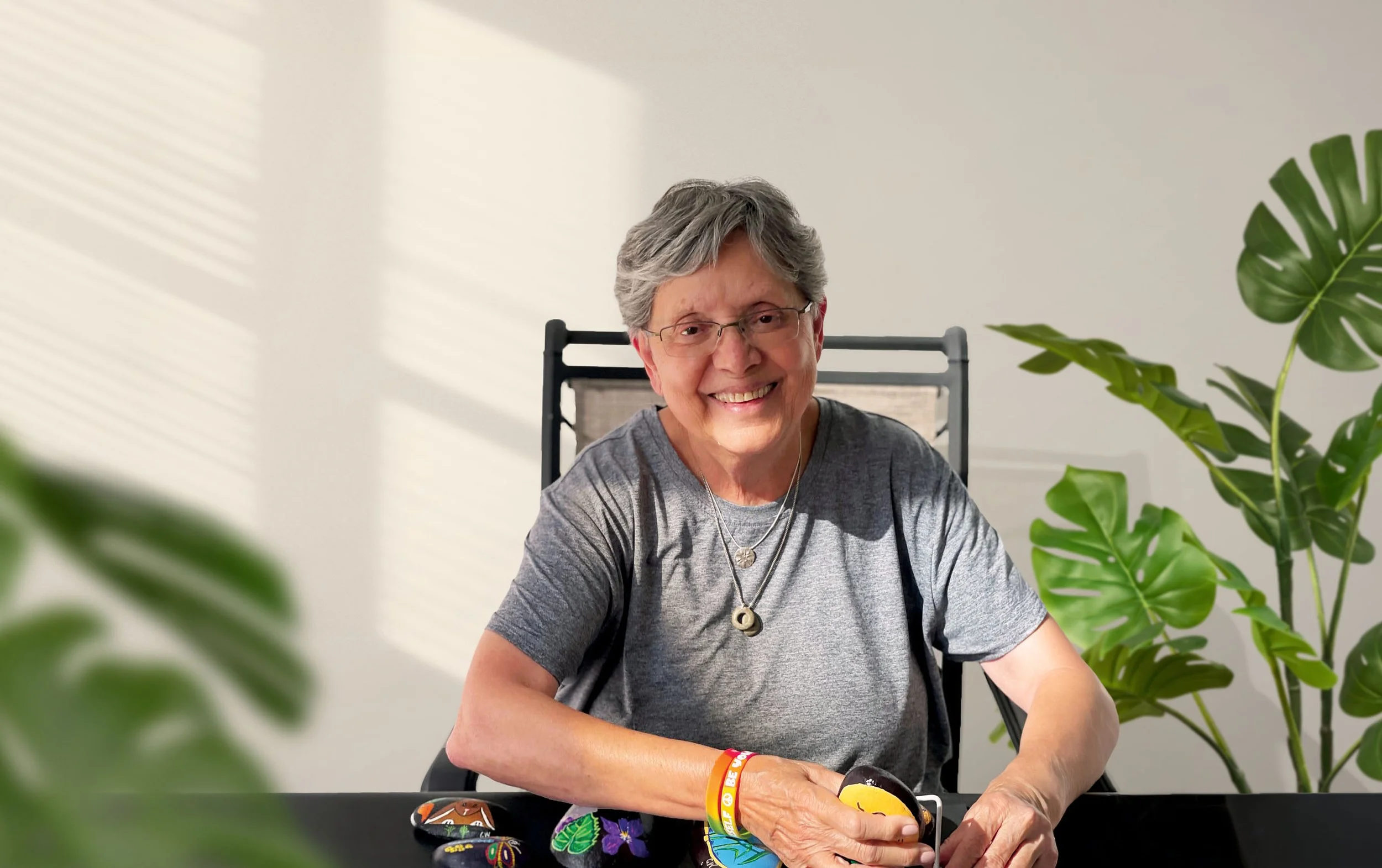
Cynthia Winter has been writing since she was a young girl. She studied English literature and art history at SUNY Albany, earned a master’s degree from Williams College and the Clark Art Institute, and spent her career in arts education, placing artists in classrooms with school-age and disabled youth.
She came to making her own visual art in her late sixties, though the groundwork had been laid long before. Her graduate study in art history taught her to read an artist’s intention and technique and to put both into precise language. That training in observation now runs through her poems and her drawings alike.
Her poetry is shaped by close attention to the natural world and to the people she encounters. She returns to a subject until she finds language that does it justice: the sound of human steps made by falling leaves, a love that is flawless “as you stumble, fall, and do it all wrong,” strangers observed on the beach at Provincetown, a single dragonfly settling on a thistle.
Bittersweet: The Certainty of Change, her debut poetry collection, was published in 2026. A second collection is underway.
—On Writing
Caught by the World
Every poem begins the same way: as an acute awareness, a moment in the world that demands to be captured before it escapes. Cynthia revises until the language reflects the music she hears in her mind, and she reads her poems standing, so she can breathe and gesture with them. For her, a poem is finished when it can be felt as much as read.
I write only when I feel deeply about something I have witnessed.
—On Art
Life, Held Still Enough to Draw
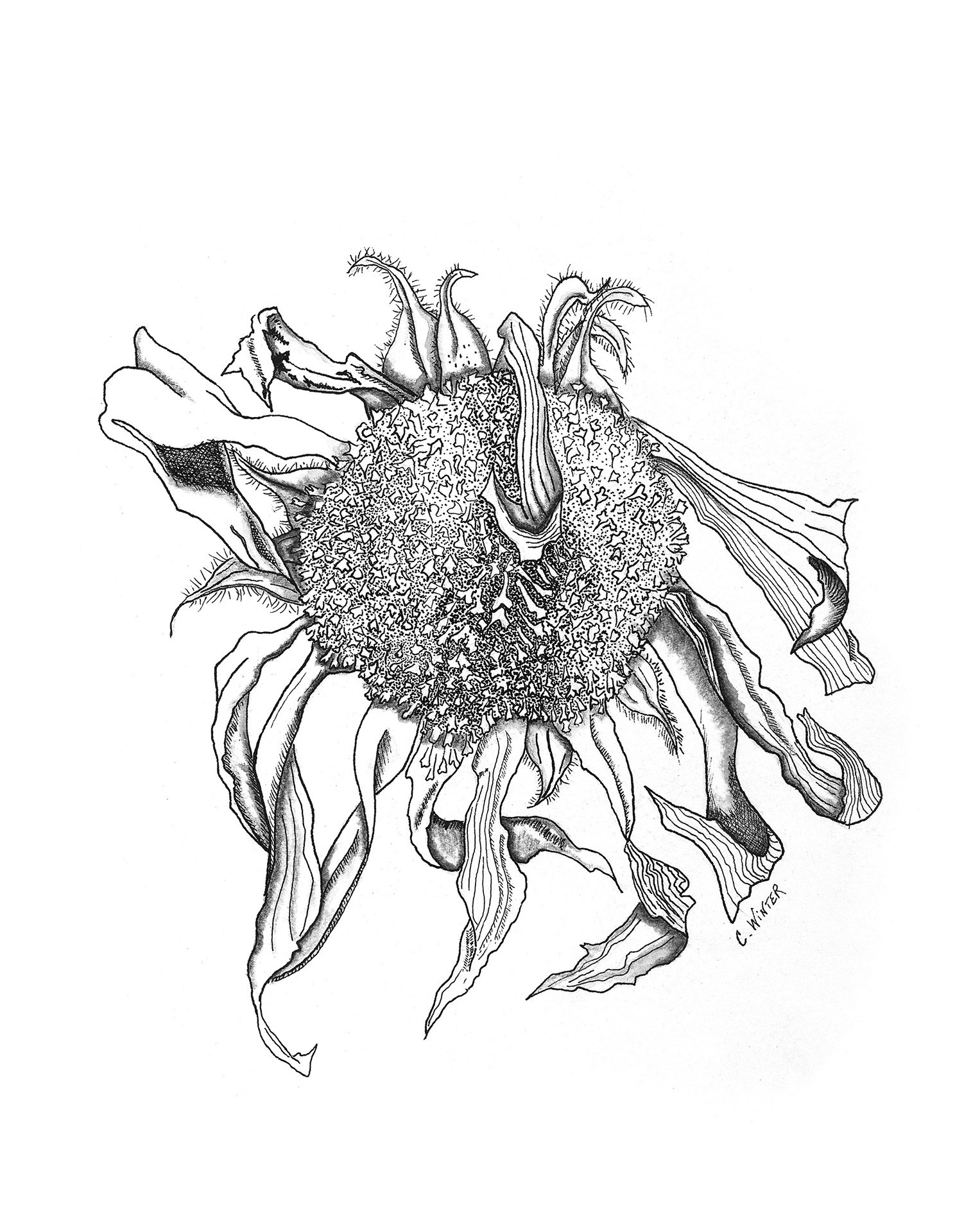
Cynthia came to drawing and painting the way she came to everything: through sustained observation. For years before she picked up a brush seriously, she was photographing the natural world in close-up, attending to the texture of a sunflower’s face, the spotted cap of a mushroom, the tilt of a raven’s head. Those photographs became her subjects. She works at a small scale and describes drawing as a form of meditation, treating each subject as a self-portrait of some beautiful aspect of nature.
A fragile root will break through hardened ground, will from a buried position push newly into light.
—Cynthia Winter